
"coffee harvest process"
10000 article(s) found

Does Kenya's single bean taste good? the planting and processing of Kenya's single bean
For the exchange of professional baristas, please follow the coffee workshop (Wechat official account cafe_style) Kenya Kenyan population: 44353000 Central Kenya produces the most coffee beans, of which the highest quality coffee beans also come from the central producing areas. At present, western Kenya is also interested in growing coffee, such as Kisi Kisii, Trans-Enzoya Trans-Nzoia, Keiba Keiyo, Mara.

Explain the steps of wet treatment after coffee picking
As the harvest season is almost over, I would like to add an overview of the coffee processing process. In this blog post, I will introduce to you the steps of wet treatment in Yunnan after coffee picking. After harvest, the berries are either sent directly to the pulp collector (if the harvest is done well), or concentrated in a siphon tank filled with water. The berries are here.

Kirimbi Kailengra-West Asia Processing Plant Information, Nyamasheke Region, Western Province of Rwanda Coffee
Professional coffee knowledge exchange More coffee bean information Please pay attention to coffee workshop (Weixin Official Accounts cafe_style) ◎ Introduction: Rwanda coffee-Kerengra-West Asia processing plant is located in the southwest of Rwanda, not far from the green hills on the south bank of Lake Kivu. It was founded in 2006, and although the treatment plant is at an altitude of 1800 meters, the harvested coffee even spans up to 20 meters.

A brief introduction to the cultivation of delicious Kenyan boutique coffee beans, geographical location, climate and altitude
Like the choice of other coffee producing countries, although SL-28 and SL-34 have stood the test of time and cultivated generation after generation of faithful pumps for Kenyan coffee, the Kenyan government and the Coffee Research Institute (Coffee Research Foundation) have begun to promote a new variety, Ruiri 11, for the sake of coffee yield and disease resistance.

Harvest season for coffee planting in Kenya
Follow the caf é (Wechat official account vdailycom) found that the beautiful cafe opened a small shop of its own. The Kenyan coffee variety was originally brought to Kenya to grow Bourbon bourbon. In the 1950s, Scott Laboratory, the then agricultural research institution, made unremitting efforts to select and breed two excellent hybrids, SL-28 and SL-34, which subverted the long-term.
The harvest and processing process of coffee beans and two basic processing methods
Picking: due to climatic differences, the harvest season is usually from September to March in the Northern Hemisphere and from April to August in the Southern Hemisphere. When the coffee beans are ripe, they can be picked. In many alpine slopes, coffee must be picked manually. In relatively flat producing areas such as Brazil, Australia and Hawaii, they can be picked by machines. These two methods

Harvest and production of coffee the processing and operation of coffee beans the picking of coffee beans
The collection time is different in different countries and regions. The harvest process requires a lot of manpower, especially high-quality coffee, which can only pick fully ripe brown coffee peaches. Since all coffee peaches do not ripen at the same time, you need to go back to the same tree many times to pick them. Coffee beans come from a ripe peach called cherrie.
The steps of wet treatment of coffee beans after picking
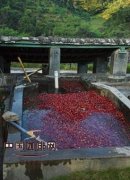
As the harvest season is almost over, I would like to add an overview of the coffee processing process. In this blog post, I will introduce to you the steps of wet treatment in Yunnan after coffee picking. After harvest, the berries are either sent directly to the pulp collector (if the harvest is done well), or concentrated in a siphon tank filled with water. The berries are here.

Description of the Flavor of Coffee picking and processing introduction to the characteristics of Coffee varieties in planting Environment
Introduction to the characteristics of varieties in the planting environment and production areas in Yunnan, this process is mainly accomplished by natural fermentation. The term fermentation is not 100% accurate because there is no biochemical reaction inside the coffee beans. It is more appropriate to call this process the use of biochemical reaction or hydrolysis to remove mucus. This reaction is caused by coffee berries.

A brief introduction to the treatment method of grinding degree and baking degree of glossy Kenyan boutique coffee beans
Bourbon Bourbon was first brought to Kenya for planting. In the 1950s, the then agricultural research institution Scott Laboratory selected two excellent hybrids, SL-28 and SL-34, through unremitting efforts, subverting the long-standing prejudice of artificial breeding without excellent natural varieties. SL-28 and SL-34 helped Kenyan Coffee form its own unique

A brief introduction to the treatment method of grinding degree and baking degree of fruit-flavored Kenyan fine coffee beans
Bourbon Bourbon was first brought to Kenya for planting. In the 1950s, the then agricultural research institution Scott Laboratory selected two excellent hybrids, SL-28 and SL-34, through unremitting efforts, subverting the long-standing prejudice of artificial breeding without excellent natural varieties. SL-28 and SL-34 helped Kenyan Coffee form its own unique

Introduction to the treatment process of raw coffee beans Coffee trees bear fruit several times a year
When the coffee berries are ripe, they are usually harvested by manual picking. In some places, only the fully ripe berries are picked, while others are all picked from a single branch. The former is called handpicked and the latter is called strip-picking. Because the ripening time of coffee berries is not consistent, the harvest is likely to be divided into several stages.

The skill of turning fresh coffee fruits into fresh coffee beans
The variety of coffee treated with raw beans certainly determines the natural flavor, but the treatment of raw beans determines the acquired quality. Selected coffee attaches great importance to flavor and quality, so it pays special attention to the technology and details of processing. Harvest: the harvest method is one of the criteria for judging selected coffee. if calculated from the time of germination, Arabica coffee will take about 5 years to blossom and bear fruit. Brazil

Step Analysis of Wet treatment of Coffee after picking
As the harvest season is almost over, I would like to add an overview of the coffee processing process. In this blog post, I will introduce to you the steps of wet treatment in Yunnan after coffee picking. After harvest, the berries are either sent directly to the pulp collector (if the harvest is done well), or concentrated in a siphon tank filled with water. The berries are here.

Wet treatment methods and steps of Yunnan coffee beans
As the harvest season is almost over, I would like to add an overview of the coffee processing process. In this blog post, I will introduce to you the steps of wet treatment in Yunnan after coffee picking. After harvest, the berries are either sent directly to the pulp collector (if the harvest is done well), or concentrated in a siphon tank filled with water. The berries are here.

90 + flavor spectrum "Level" Gesha variety Level 195 (19) was harvested in a single producing area.
In the flavor spectrum of 90 +, there is a Level logo. It is the number after the product name mark L. For example, L12-means Level 12. The Level is probably in proportion to the price. It represents the grading model of raw beans: according to quality, quantity, production cost, 90 + based on the original excellent raw beans, continue to grade as follows: Level 7: single production area harvest. Will taste meticulous and
Wet treatment methods and steps of Yunnan Coffee beans
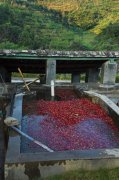
As the harvest season is almost over, I would like to add an overview of the coffee processing process. In this blog post, I will introduce to you the steps of wet treatment in Yunnan after coffee picking. After harvest, the berries are either sent directly to the pulp collector (if the harvest is done well), or concentrated in a siphon tank filled with water. The berries are here.

Planting, harvesting, treatment, drying, grinding, export, cup testing, baking, grinding, cooking
Planting growing coffee beans is actually a kind of seed. When dried, roasted and ground, it can be used to make coffee. If the seeds are not processed, they can be planted and germinated into coffee trees. Coffee seeds are usually planted in big beds in shaded nurseries. Always water the seedlings and block the bright light until they thrive. Planting is often carried out in the rainy season

The income of Yunnan farmers is decreasing year by year. The plight of Yunnan small-grain coffee, please cherish every cup of coffee.
Professional coffee knowledge exchange more coffee bean information Please follow the coffee workshop (Wechat official account cafe_style) is another year's harvest season, Yunnan coffee is generally a bumper harvest. Fresh red and green fruits hang all over the branches, and coffee enters the harvest season in Yunnan at the end of November. According to the report of Industry and Economic observation, the income of Yunnan farmers has decreased year by year, and the price this year is about 30% lower than that of the same period last year. Kanongle

Treatment methods of coffee beans after picking wet treatment steps
As the harvest season is almost over, I would like to add an overview of the coffee processing process. In this blog post, I will introduce to you the steps of wet treatment in Yunnan after coffee picking. After harvest, the berries are either sent directly to the pulp collector (if the harvest is done well), or concentrated in a siphon tank filled with water. The berries are here.